|
|
|
|
|
|||
|
||||||
| |||||||||||
|
|
The Katipunan Finally Starts a Revolution
Andres Bonifacio was also a member of La Liga Filipina, although he soon lost hope in gaining reforms though peaceful means. This feeling was especially heightened when Jose Rizal was exiled to Dapitan. Bonifacio became convinced that the only way the Philippines could gain independence was through a revolution.
Bonifacio then founded the “Katastaasang Kagalanggalangang Katipuanan ng mga
Anak ng Bayan” (KKK) on July 7, 1892 in a house on Azcarraga street (now Claro
M. Recto), in Tondo Manila.
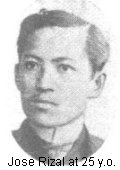
Andres Bonifacio had already known Rizal during his La Liga Filipina days, although Rizal did not know Bonifacio personally Nevertheless, Bonifacio so respected Rizal’s intelligence and talent that in June 1896, he sent Dr. Pio Valenzuela to Dapitan to seek Rizal’s advice on the planned revolution. Rizal told Valenzuela that the timing was not right for a revolution. The people were not yet ready and they did not have enough weapons. He suggested that the Katipunan obtain the support of wealthy and influential Filipinos first, in order to gain financial assistance. He also recommended Antonio Luna as commander of its armed forces, since Luna had much knowledge and expertise in military tactics.
Valenzuela returned to Manila on June 26 and relayed Rizal’s advice to
Bonifacio, who admitted that it would indeed be fatal for the Filipinos to fight
without enough weapons. However, there was no stopping the Revolution. Bonifacio
ordered his men to prepare for battle. He directed them to store enough food and
other supplies. Battle plans were made with the help of Emilio Jacinto. It was suggested
that the revolutionary headquarters be located near the seas or mountains to provide
for an easy retreat, if necessary. The information upset Honoria so much that she told the orphanage’s Mother Superior, Sor Teresa de Jesus, what her brother had revealed. Sor Teresa suggested they seek the advice of Father Mariano Gil, the parish priest of Tondo. After hearing Patiño’s revelations, Father Mariano Gil-accompanied by several Guardias Civiles immediately searched the premises of Diario de Manila and found evidence of the Katipunan’s existence. The governor general was quickly informed. The printing press was padlocked and hundreds of suspected KKK members were arrested. -Continue to Cry of Pugad Lawin & Andres Bonifacio's Execution.
Back to Philippine History - Home Page |
Copyright © 2005-2025
PHILIPPINE-HISTORY.ORG
|